


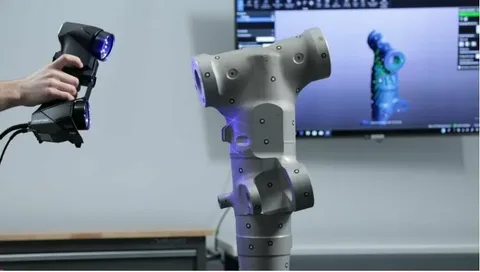
3D scanning technology has made significant advancements over the past few years, revolutionizing industries like manufacturing, healthcare, architecture, and entertainment. However, despite its growing popularity, there are still many misconceptions surrounding this technology. In this article, we’ll debunk five common misconceptions about 3d scanning that you should know in order to better understand how this technology works and its true potential.
1. 3D Scanning Is Only for Large-Scale Projects
One of the most prevalent misconceptions about 3D scanning is that it’s only suited for large, complex projects like industrial manufacturing or architectural modeling. In reality, 3D scanning is highly versatile and can be used for a wide range of applications, from small-scale objects like jewelry and artifacts to large-scale infrastructure like bridges and buildings.
Many modern 3D scanners are portable and can be used in various environments, including offices, labs, or even outdoor settings. Whether you’re a designer working on a prototype or a museum looking to digitally preserve artifacts, 3D scanning can be adapted to fit a range of needs and sizes.
2. 3D Scanning Is Expensive and Only for Professionals
Another common misconception is that 3D scanning technology is prohibitively expensive and limited to only large corporations or expert users. While it’s true that high-end 3D scanners used in certain industries can be costly, the market has expanded, and affordable scanners are now available for hobbyists, small businesses, and individual users.
There are budget-friendly options for those who are just starting to explore 3D scanning, such as desktop 3D scanners, smartphone apps, and DIY kits. With these accessible solutions, even beginners can quickly create high-quality 3D models without needing specialized knowledge or large financial investments.
3. 3D Scanning Produces Perfect Models Every Time
A common misconception is that 3D scanning technology automatically generates flawless models without any need for post-processing. While modern 3D scanners are capable of capturing detailed and accurate data, the quality of the output often depends on several factors, such as the scanning environment, the object being scanned, and the settings used.
Scanners may struggle with reflective surfaces, transparent materials, or highly detailed textures, which can result in imperfect or incomplete scans. Post-processing techniques like mesh cleaning, hole-filling, and texture mapping are often required to refine and enhance the 3D model for practical use.
4. 3D Scanning Is Only Useful for Creating Physical Objects
Many people assume that 3D scanning is primarily used for producing physical replicas through 3D printing. While 3D printing is certainly a popular application, 3D scanning has a broader range of uses that go far beyond just creating physical objects.
For instance, 3D scanning is widely used in virtual reality (VR) and augmented reality (AR) applications, where realistic 3D models of objects or environments are integrated into digital experiences. It’s also a key tool in fields like healthcare (e.g., creating prosthetics and orthotics), forensic investigation (e.g., crime scene reconstruction), and cultural heritage preservation (e.g., digitizing artifacts and monuments).
5. 3D Scanning Is a Slow and Complicated Process
Finally, some people believe that 3D scanning is a time-consuming and overly complicated process. While it is true that certain types of 3D scanning can take longer, especially for highly detailed objects or large scenes, many modern scanners are designed to be fast and user-friendly.
Portable scanners, in particular, are capable of capturing data in real-time, allowing users to scan objects or environments quickly and with minimal setup. Even when scanning complex or large objects, advances in scanning technology have dramatically reduced the time required to capture data, making 3D scanning a practical solution for both professionals and hobbyists alike.
Conclusion
3D scanning technology has evolved considerably, and the myths surrounding it often prevent people from fully exploring its potential. By debunking these five common misconceptions about 3D scanning, we hope to shed light on the true versatility, accessibility, and practical applications of this innovative tool.
