


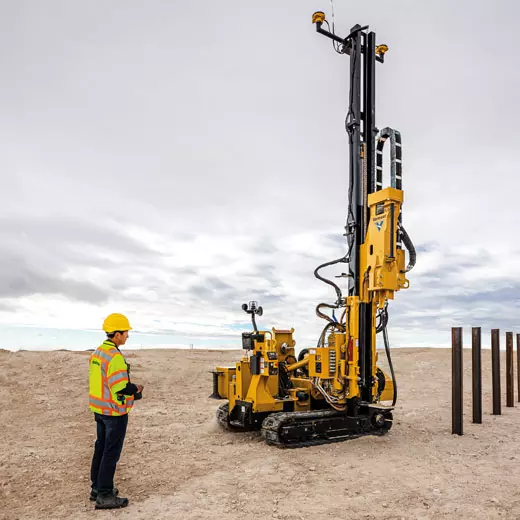
The construction industry is undergoing a significant technological transformation. As projects become more complex and demand for precision increases, contractors are turning to advanced technologies to improve efficiency and reduce costs. One of the most impactful innovations is machine control technology. Today, machine control construction Trends Shaping the Industry are redefining how construction companies plan, execute, and manage projects on job sites around the world.
From GPS-guided equipment to automated grading systems, machine control solutions are helping contractors achieve higher accuracy, better productivity, and safer work environments.
The Rise of Smart Construction Equipment
Modern construction equipment is no longer just about power and durability. It is increasingly equipped with sensors, GPS systems, and onboard computers that allow machines to operate with remarkable precision.
These smart systems allow operators to follow digital site models and automatically adjust blade or bucket positions. As a result, contractors can complete grading, excavation, and earthmoving tasks more accurately than ever before. Many of the Machine Control Construction Trends Shaping the Industry revolve around integrating intelligent technologies directly into heavy equipment to minimize human error and maximize efficiency.
Increased Accuracy Through GPS and 3D Modeling
One of the most important developments in machine control is the integration of GPS and 3D modeling technologies. These tools enable construction teams to translate digital designs directly into machine instructions.
Instead of relying on manual measurements and survey stakes, operators can now view the project design directly from the machine’s display. This real-time guidance helps reduce rework, saves time, and ensures that projects stay aligned with engineering specifications. Such innovations represent key Machine Control Construction Trends Shaping the Industry as companies strive to deliver projects faster and with greater precision.
Automation and Semi-Autonomous Machines
Automation is rapidly becoming a defining feature of modern construction sites. Machine control systems are evolving beyond simple guidance tools to include semi-autonomous functions.
For example, automated grading systems can control the blade of a bulldozer or motor grader based on the project’s digital model. This reduces the need for constant manual adjustments and allows operators to focus more on overall machine movement and safety.
As automation capabilities expand, Machine Control Construction Trends Shaping the Industry are pushing construction toward smarter, more connected job sites.
Improved Productivity and Cost Efficiency
Machine control technology is helping contractors significantly improve productivity. By reducing the need for repeated measurements, manual corrections, and rework, projects can move forward more smoothly.
Fewer errors mean less wasted material and lower labor costs. Additionally, the ability to complete tasks faster allows contractors to handle more projects within the same timeframe. These benefits make machine control systems an increasingly valuable investment for construction companies looking to remain competitive.
Integration with Digital Construction Workflows
Another major trend is the integration of machine control systems with broader digital construction platforms. Project managers can now share design updates, monitor equipment performance, and track progress in real time.
Cloud-based systems enable seamless collaboration between surveyors, engineers, and machine operators. This digital connectivity ensures that everyone involved in the project is working with the most up-to-date information.
These integrated solutions represent some of the most important Machine Control Construction Trends Shaping the Industry, helping construction companies build smarter and more efficiently.
The Future of Machine Control in Construction
Looking ahead, machine control technology will continue to evolve as artificial intelligence, robotics, and data analytics become more integrated into construction processes. Future systems may include fully autonomous machines capable of performing complex tasks with minimal human intervention.
As infrastructure demands increase worldwide, construction companies will rely heavily on advanced technologies to deliver projects on time and within budget.
Ultimately, the ongoing Machine Control Construction Trends Shaping the Industry highlight a clear shift toward automation, precision, and digital integration—transforming traditional construction sites into highly efficient, technology-driven environments.
