


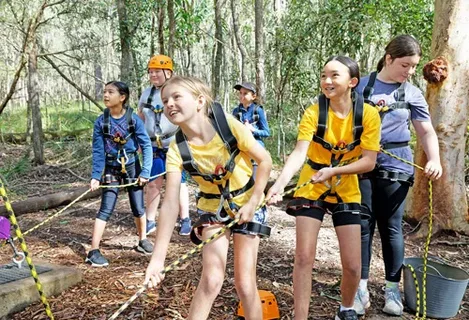
When students head off on a school camp in Sydney, they aren’t just packing tents and sleeping bags — they’re stepping into a powerful learning environment that fosters confidence, teamwork, resilience, and personal growth beyond the classroom.
According to the NSW Office of Sport, school camps delivered at their sport and recreation centres are explicitly designed to enhance physical, mental and social wellbeing, with a strong emphasis on confidence, independence and teamwork development for both primary and secondary students.
School camps — whether they’re in the rugged Blue Mountains, peaceful south coast bushlands, or by the Central Coast’s waterways — have long been treasured experiences in the Sydney school calendar.
But beyond the fun, laughter, and occasional homesickness, these camps provide structured opportunities for students to develop essential life skills that will serve them far into adulthood.
Why School Camps Matter
At their core, school camps Sydney schools organise remove students from their everyday routines and common comfort zones. That change of setting is not just refreshing — it’s transformative. Without the usual safety net of family and regular school environments, students learn to navigate new challenges in real time. Simple tasks such as managing belongings or figuring out meal routines become moments of empowerment and independence — small wins that quietly build self-confidence.
But perhaps the most powerful outcomes of these experiences lie in social learning and team dynamics. During school camps in Sydney, students are placed in unfamiliar groups and tasked with collaborative challenges, helping them quickly realise that success depends on communicating clearly, listening actively, and supporting one another — key elements of teamwork.
Teamwork in Action
School camps are packed with activities that are designed to require cooperation and collaboration. Whether it’s building a shelter, completing a ropes course, navigating an orienteering trail, or leading a group discussion, these experiences push students to practise working together, leveraging each person’s strengths, and resolving conflicts constructively.
In such settings:
- Communication becomes essential: Students quickly understand that vague instructions or silence often lead to mistakes. Camp activities like group hiking or team games demand clear communication and listening skills for everyone’s safety and success.
- Problem-solving grows organically: When plans don’t go as expected — a common occurrence in outdoor settings — students learn to think creatively, adjust strategies, and support each other. These moments reinforce collaborative problem-solving as a way of navigating real challenges.
- Trust and empathy are practised: Activities like low-ropes courses or trust walks require students to support teammates physically or emotionally, teaching them empathy and the importance of mutual reliance.
These group challenges teach students that teamwork isn’t just about working side by side — it’s about listening, adjusting, and contributing to a shared goal, lessons they can carry back into school, sports, and future workplaces.
Building Confidence Through Experience
The confidence that school camps build doesn’t come from one monumental achievement — it comes from many small moments of succeeding against the odds. When a student who was previously shy completes an activity they thought was too hard, or when a nervous camper makes new friends, those experiences create lasting self-belief.
Research into outdoor education broadly supports this effect: camps and outdoor programs have been shown to reduce anxiety, strengthen peer connections, and increase students’ sense of efficacy — all key markers of confidence and wellbeing.
Sydney school camps provide structured opportunities for students to:
- Test personal limits in supportive environments
- Take on new responsibilities independently
- Try unfamiliar activities that broaden self-perceptions
- Receive encouragement from peers and leaders
Each of these moments crystallises into a deeper sense of “I can do this”, a mindset that underpins lifelong confidence.
Beyond Confidence — Developing Social Skills
The social environment of a school camp is rich with opportunities to practise valuable interpersonal skills. Living and working alongside peers — often outside regular friendship groups — encourages students to better understand others, navigate diverse perspectives, and form new connections.
Camp settings also naturally encourage:
- Leadership development: Students often take turns leading activities or groups, helping them practise motivating others and making decisions.
- Conflict resolution: In close quarters, disagreements will happen — and students learn how to manage them constructively with guidance from teachers and facilitators.
- Empathy and support: Camp fosters an environment where students see that supporting others — particularly those who struggle — strengthens the group as a whole.
These social skills are deeply interconnected with teamwork and confidence: the more effectively students communicate and relate to one another, the more confident and competent they become as collaborators and individuals.
Lasting Benefits for Life
While the sights and sounds of camp — the crackling campfire, starry night skies, and team cheers — may fade with time, the skills students build at Sydney school camps remain. Confidence, resilience, teamwork, communication, and leadership aren’t just helpful in school — they’re essential for success in higher education, careers, and community life.
Parents, teachers, and education researchers alike recognise that school camps are much more than memorable trips; they’re powerful developmental experiences that shape students long after the buses have come home.
School camps in Sydney are far more than a break from classroom routine. They are carefully designed experiences that challenge young people to grow, connect, and excel.
Through shared challenges, structured activities, and supportive social environments, students learn to work together, communicate effectively, and trust in their own capabilities — all foundational elements of confidence and teamwork that will benefit them for a lifetime.
Whether it’s navigating a challenge course or simply making new friends around the campfire, the experiences students gain on school camps build not just skills — but people.
